

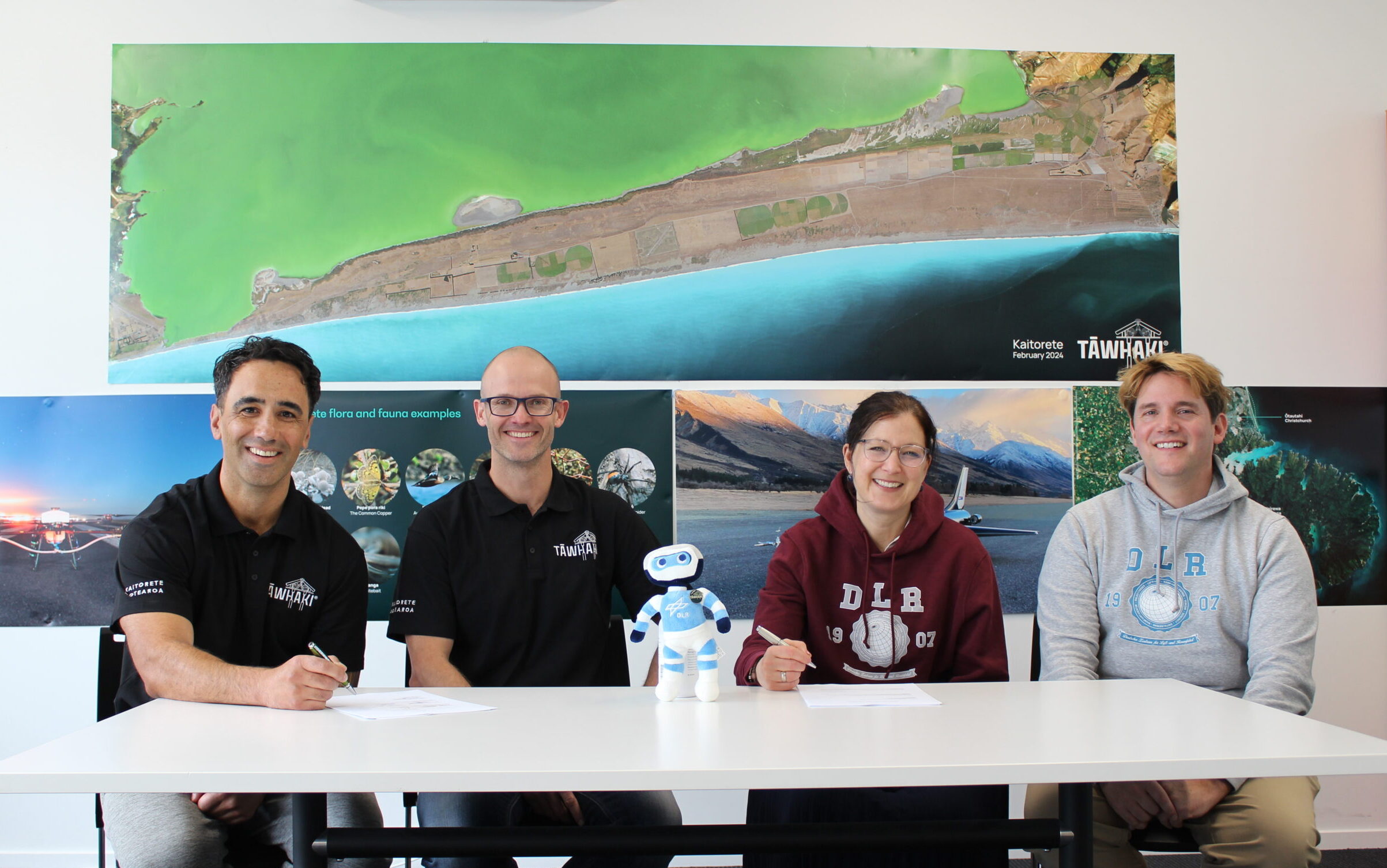
A strategic partnership between the German Aerospace Centre (DLR) and Tāwhaki will create a “sister centres” framework to enable shared research, environmental rejuvenation, and the advancement of uncrewed aviation and aerospace research.
“At the heart of this agreement is a deep alignment in values. Both Tāwhaki and DLR are committed to advancing aerospace innovation, to responsible evidence-based research, and to progress that delivers benefits for people, ecosystems and future generations,” says Jean Daniel Sülberg, Head of the National Experimental Test Centre for Unmanned Aircraft Systems at DLR.
The five-year agreement sets the foundation for collaborative innovation, shared learning and sustainable development, focused on three workstreams, the first of which is rejuvenation and environmental mātauranga.
“Tāwhaki prioritises human connection with the environment as a guide for rejuvenation. This, combined with DLR’s expertise in understanding how drone and aviation activities impact fauna provides a holistic foundation to grow our understanding of the environmental impact of the aerospace ecosystems,” says Sülberg.
“Our second workstream is focused on realising the benefits of uncrewed aircraft. Aerospace technologies are developing rapidly all over the world, but there’s no consistent global approach to how they operate and in turn are regulated,” says Stan Topping, Head of Aerospace at Tāwhaki.
“Certification processes that utilise credible data wherever it is captured will accelerate the time to market for innovators. To move closer to regulatory alignment we’ll develop equivalent trials in both Aotearoa New Zealand and Germany,” Sülberg says.
The third workstream is focused on capability development, enabling a strong pipeline of talent and capable workforces to enable aerospace and advanced aviation.
“There are significant opportunities for knowledge and capability exchange between Germany and Aotearoa, where the exchange of cultural, technical and social mātauranga can inspire the next generation of aerospace innovators,” Sülberg says.
“Global partnerships are essential to enabling novel aerospace technologies. Our ability to share knowledge and capability, to inspire and grow local talent that is connected to the environment and to our communities will drive significant success,” says Topping.
“This agreement is focused on enabling innovation to create benefits for our communities, ecosystems, industries and future talent.”